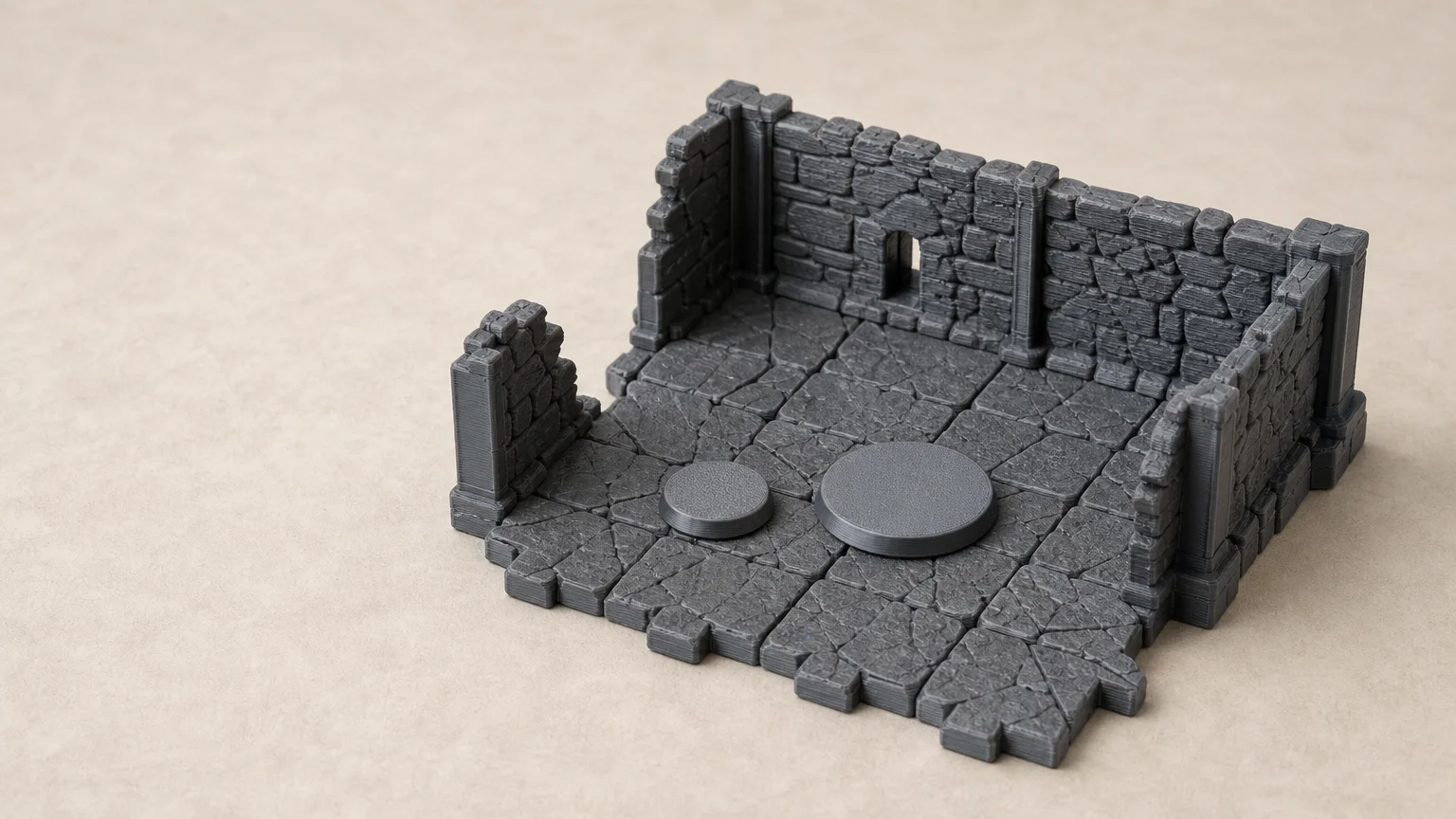
TLDR: Most 28mm and 32mm miniature terrain is cross-compatible, especially for walls, floors, doors, and large features. True scale differences usually show up in furniture, interiors, or tight fit areas. Focus on clearances and base fit, not just the scale number on the box.
If you collect terrain or miniatures for tabletop RPGs or wargames, you’ve almost certainly run into the 28mm vs 32mm debate. Should you care about those extra millimeters? Does terrain designed for "28mm" miniatures actually need to be rescaled for modern "32mm" figures? The answer is less about numbers and more about practical fit and visual feel.
Let’s clear up what actually matters for terrain compatibility, why scale labels can be misleading, and how to make your scenery work for both sizes without needless reprinting.
Miniature Scale: What Do 28mm and 32mm Really Mean?
The terms “28mm” and “32mm” refer to the height of a typical humanoid miniature, but the measurement specifics are slippery. Some manufacturers measure to eye level (“foot-to-eye”), others to the tops of heads or helmets. “Heroic” proportions can inflate heads, hands, and equipment, making two “28mm” figures look quite different side by side. Scale creep—where miniatures gradually grow taller over time—means that modern "28mm" lines are often closer to 30mm or more.
When it comes to terrain, this fuzzy labeling means you can’t just trust a number. What matters more is whether your figures can stand inside rooms, fit through doorways, and interact with furniture.
Which Terrain Features Are Affected by Scale?
Not every piece of terrain needs to match your miniatures exactly. Larger elements—dungeon floors, outer walls, buildings—usually have enough built-in tolerance to work for both 28mm and 32mm figures. Where it gets tricky is with play spaces that demand precision:
- Doorways & arches: These are the most noticeable tight spots. Many “28mm” terrain pieces actually use doorway heights of 35–45 mm, intentionally oversized so that even tall or weapon-raised figures can pass through. This makes them cross-compatible for 32mm figures in most cases.
- Furniture: Tables, beds, chairs, and other interior pieces reveal scale differences most obviously. A small table that looked fine for a 28mm thief will feel undersized for a hulking 32mm barbarian.
- Battle grids: Most printed and physical terrain for fantasy games use 1-inch squares (about 25 mm) regardless of figure scale. Miniatures on 25mm or 32mm bases will both fit these grids well, as the extra figure height doesn't change the need for base-to-base compatibility.
- Stairs and elevations: Short or narrow steps may look odd or be unusable for larger models, especially in multi-level builds.
- Ceiling clearance: If your terrain includes playable interiors with fixed ceilings, check vertical height. Some “28mm” interiors may be cramped for large 32mm miniatures and their bases.
Most outdoor or scenery pieces—like trees, ruins, scatter piles, or rocky hills—are visually forgiving. Functional fit only becomes a real issue for interior play or modular systems with tight tolerances.
Visual Scale Tolerance: How Noticeable Is the Difference?
Across a gaming table, the scale jump from 28mm to 32mm is subtle. Most players won’t spot a mismatch in doors, walls, or even furniture at a glance. Human eyes are naturally forgiving of small discrepancies, especially when scenery is designed with a bit of extra clearance. But up close, detailed furniture or interior decoration is where undersizing stands out. For most printed walls, floors, and general room layouts, the difference is barely perceptible in play.
Why You Don’t Have to Rescale Everything
Because standard terrain elements often include generous clearances and modern designs anticipate larger minis, the majority of “28mm” terrain works without modification for 32mm figures. If your miniatures' bases fit the grid and doors or arches allow figures to pass, you’re set. The main exceptions are intricate interiors or accessories where tight fit or visual realism is crucial. In these cases, consider printing some pieces at 110–115% size or checking dimensions before committing to a full set.
Need to check or adjust a particular piece? Our detailed guide covers the process in depth: How to Scale 3D Printed Terrain for 28mm, 32mm, and 1-Inch Grid Games.
Best Practices for Mixing 28mm and 32mm Terrain
- Always verify interior width, height, and base clearances for rooms and passageways.
- Use taller doors and arches (at least 35–40 mm) for cross-compatibility.
- Don’t stress about scenic elements like rocks, plants, or terrain scatter—these are generally scale-agnostic.
- When in doubt, print one sample room or furniture piece and check fit with actual figures.
- Don’t blindly trust “28mm” on the label—check the actual measurements in the file or product description.
- If your setup uses larger bases (32 mm or more), confirm that furniture and stairs aren’t rendered unusable.
For more on tile structures, grid alignments, and compatibility quirks, see Modular Dungeon Tiles Explained: Grids, Walls, Connectors, and What Actually Matters.
Common Pitfalls and Labeling Confusion
The lack of industry-wide standards makes scale labels unreliable. You’ll see "28mm scale" used for everything from true-scale historic miniatures to chunky heroic fantasy lines, and "32mm" may simply reflect modern marketing. Always look for actual measurements: doorway clearance, tile size, and internal heights matter more than any stated scale.
Some brands intentionally design a little larger than their stated scale to accommodate scale creep, while others expect players to rescale terrain files to suit their needs. If buying or printing furniture, check the overall height and compare to your miniatures—tables and chairs are the most likely to betray a mismatch.
When Rescaling Becomes Necessary
If your miniatures constantly bump into ceilings, can’t stand within rooms, or look comically oversized next to thrones and beds, it’s time to consider printing select pieces larger. Start with functional hot spots: beds, doors, stairways, and central furnishings. Standard floors, walls, and environmental scatter rarely require changes.
For a deeper look at what tiles and major elements need—and don’t need—scaling, check our complete starter guide: How to Start a 3D Printed Terrain Collection Without Printing Too Much.
FAQ: 28mm vs 32mm Terrain
- Can I use 28mm terrain for 32mm miniatures? Usually yes, especially for walls, floors, and modular tiles—just check key clearances.
- What terrain needs the most adjustment when changing scale? Furniture, archways, and tight interiors. These reveal mismatches first.
- Do I need to rescale doors and windows? Most “28mm” doors are generously sized. Only small or historic-scaled pieces usually need upscaling for big 32mm minis.
- Is the scale difference visually obvious? Not for most terrain elements. Visual discrepancies are modest, except up close with finely-detailed furnishings.
- How do base sizes and grid alignment affect compatibility? As long as your base fits the intended grid or floor tile (most often 1-inch), both 28mm and 32mm minis will play well on the same terrain.
Conclusion: Focus on Clearance, Not Just Label
28mm vs 32mm terrain comes down to practical fit and sensible clearances—not chasing after the numbers printed on packaging. Most tabletop terrain today is generously sized and can accommodate the full range of fantasy miniature scales without modification. When in doubt, check a part’s real-world measurements, test with your favorite minis, and only rescale the pieces where fit or appearance truly matters.