How Deep Should Texture Be on 3D Printed Terrain?
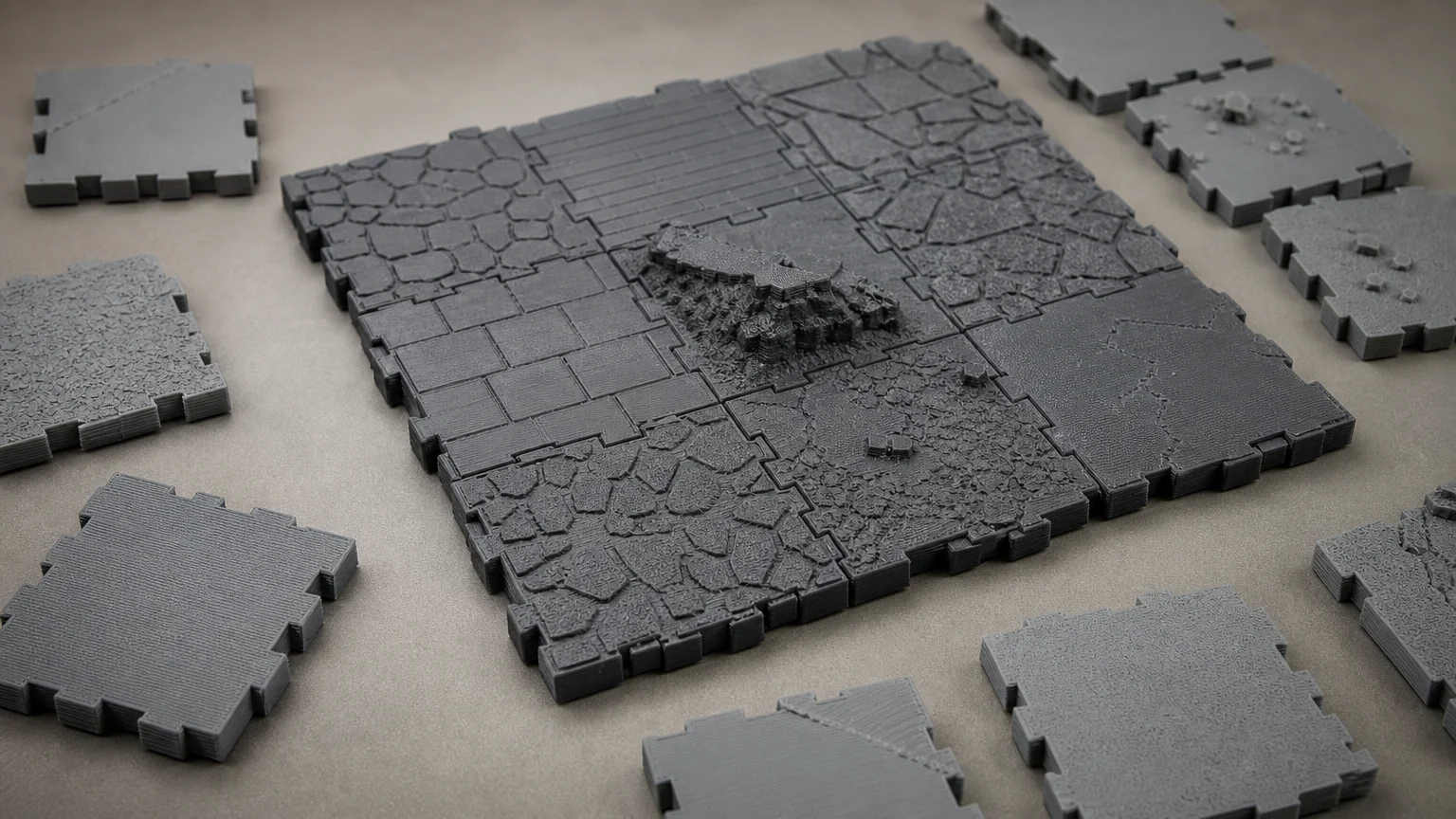
Learn how to balance detail, printability, and playability by understanding the best 3D printed terrain texture depth for your gaming table.
Learn how to balance detail, printability, and playability by understanding the best 3D printed terrain texture depth for your gaming table.
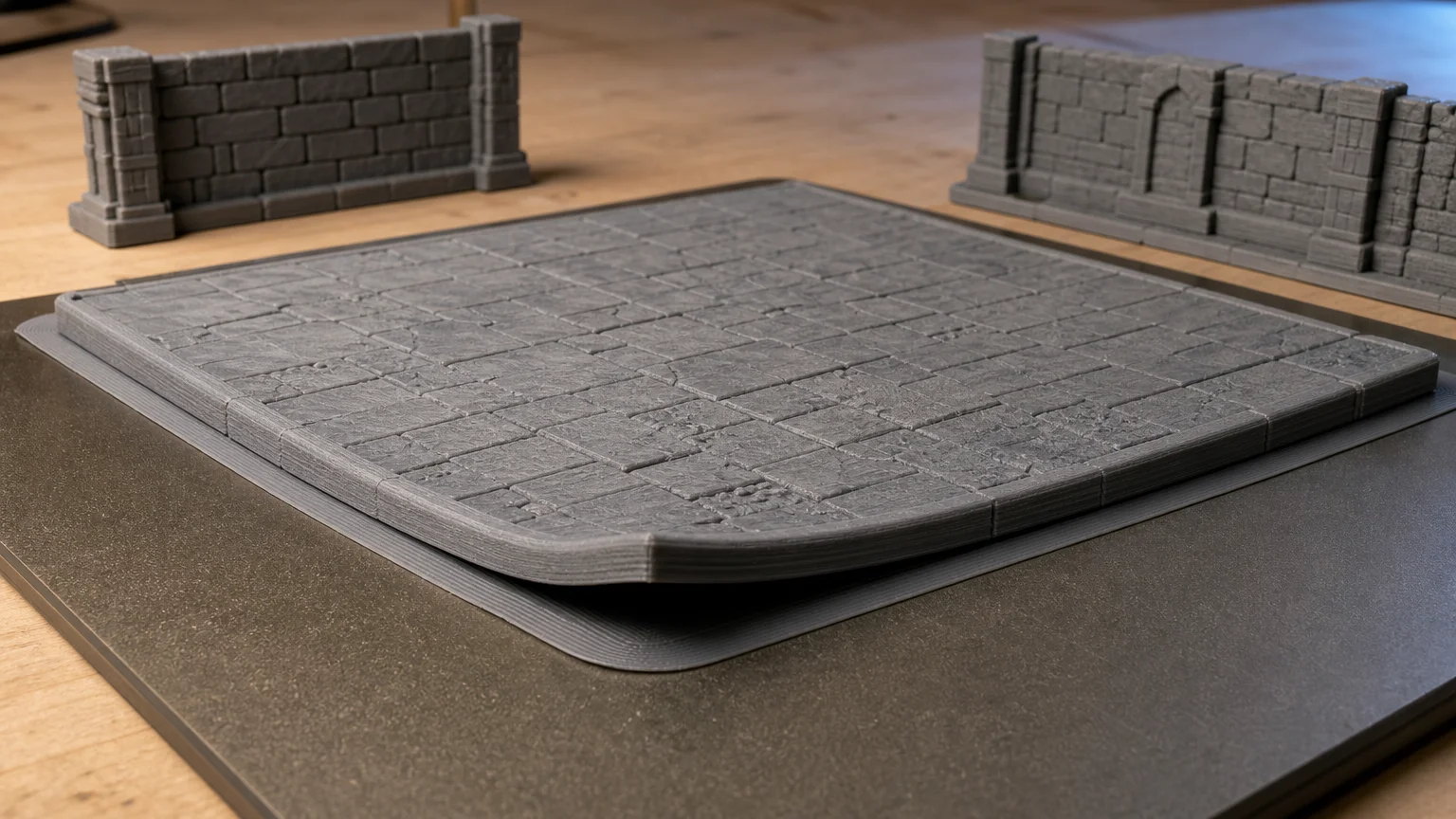
Learn why large dungeon floors, tiles, and long walls curl at the corners, then work through practical fixes for adhesion, drafts, material choice, and geometry.
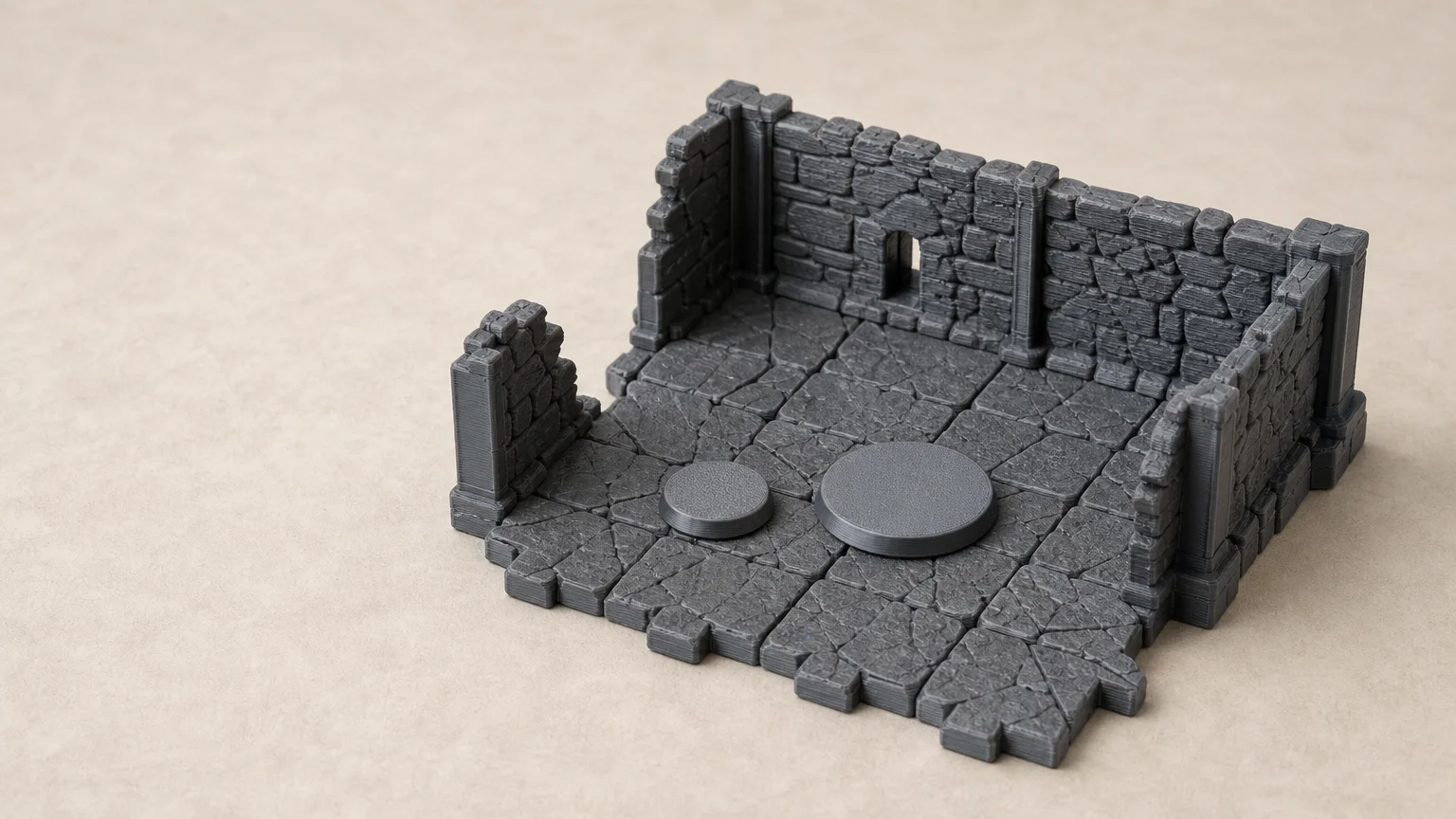
Find out when 28mm and 32mm terrain scales are cross-compatible, which features need attention, and what scale labels really mean for your RPG or wargame table.
Learn exactly how to plan, print, and assemble a modular 3D printed dungeon. Covers standard dungeon sizes, connectors, print tips, and real planning advice for an efficient, playable set.
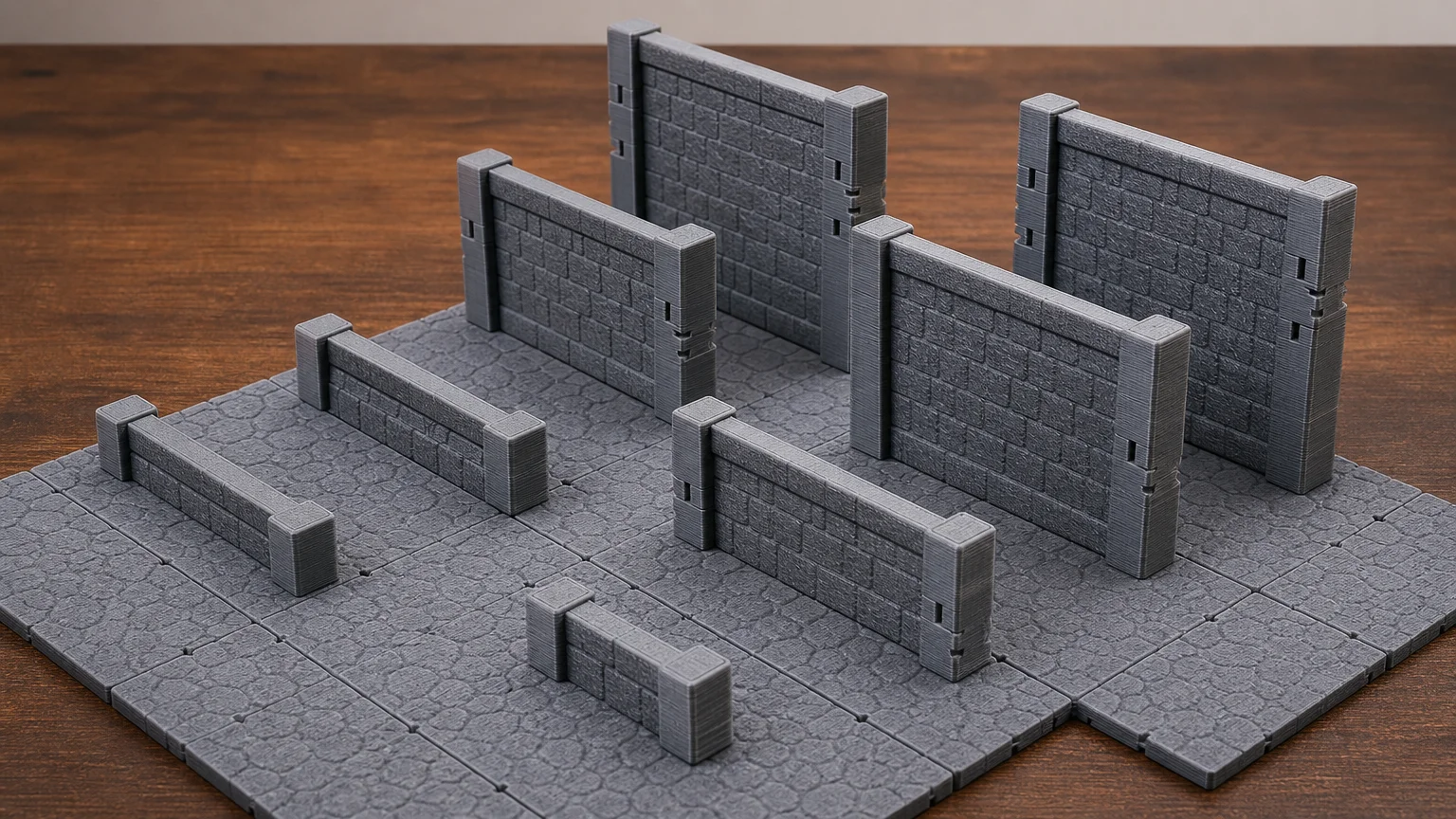
No universal wall height fits every 3D-printed dungeon. Find out how to balance immersion and playability by choosing the right wall height for your tabletop terrain.
Learn how to build a functional 3D printed terrain starter set—floors, walls, doors, stairs, and scatter—for tabletop games, and avoid printing random models.
Struggling to choose the best nozzle size for 3D printed terrain? We break down 0.4 mm vs 0.6 mm, plus when to go bigger or smaller, to help your next tabletop build.
TLDR Using PLA at $20 per kilogram, a useful planning range looks something like this: Dungeon Size Example Filament Example Print Time Filament + Electricity* Small encounter set 1.5 kg 75 hr About $32 Full modular dungeon 3 kg 150 hr About $63 Large campaign set 5 kg 250 hr About $106 *Examples assume a … Read more
TLDR A spool of filament can turn into a surprising amount of tabletop. That is one of the things that makes 3D printed terrain so appealing. You are not limited to the walls, buildings, ruins, or dungeon tiles that happen to come in a box. Once you have a printer and a good set of … Read more
TLDR For most FDM tabletop terrain, a strong starting profile is: Setting Starting Point Nozzle 0.4 mm Layer height 0.20 mm Walls/perimeters 3 Infill 10–15% Supports Off unless needed Filament PLA First layer Use your printer’s proven default Print speed Start with the established filament/printer profile These are starting points, not universal rules. A giant … Read more
TLDR A dungeon tile looks simple until you try to design a complete dungeon around it. The floor is the easy part. The difficult questions start at the edges. Where does the wall go? Does it consume part of the playable square? How do two floors connect? What happens at a corner? Can the same … Read more
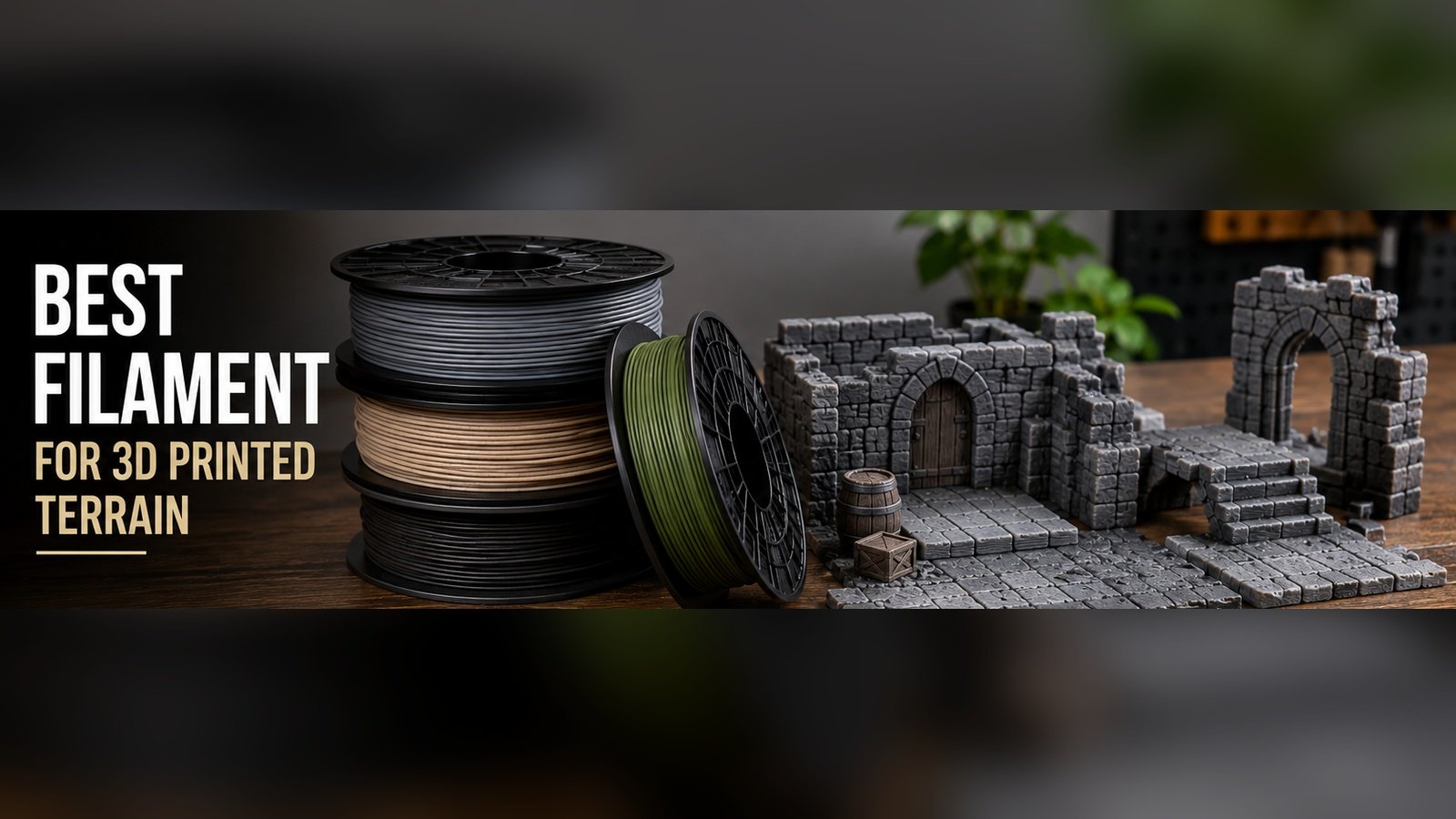
TLDR Terrain doesn’t ask much from filament in the traditional engineering sense. A dungeon wall doesn’t need to hold up an engine. A stone floor doesn’t need to survive outdoors for ten years. What terrain does need is good detail, reliable printing, reasonable durability, and a material cheap enough that printing an entire dungeon doesn’t … Read more